The House Mouse
There is no doubt that the mouse is one of the species that is most associated with areas of human habitation, and the house mouse is the commonest of this species to be found in North America. Although many people perceive mice as being quite cute and furry, people who suffer from an infestation in their home will often find their opinion will change quickly. These small rodents aren't as dangerous or dominant as the rat, and as such they have often appeared in many cartoons and other shows.
Appearance And Biology
The common House Mouse can have a range of colors in their fur, ranging from the white and the light gray end of the scale down to the brown and black mice. These mice will usually be between three and four inches in length, though will often be even smaller than this. They will also have a
long hairless tail that can be as long as the body of the mouse itself. The House Mouse is known for it's large eyes and inquisitive face which has made it such a cute animal.
A large number of these mice in the wild will be very small, but they have been known to grow significantly larger in captivity. In young mice it can often be quite difficult to distinguish between the baby males and females, and this will only become apparent as they grow. Mice will communicate in a high frequency squeak, and have a very advanced sense of hearing.
Behavior And Life Cycle
Mice are very quick when threatened, and can move very well and are particularly efficient at climbing and swimming as well as running around quickly. Their strong tails will help them to stand on their hind legs for a better view of their surroundings and also when they are feeding. They are nocturnal animals and the males are also very territorial. The male House Mouse will often live in their den with a number of female mice and young.
The life cycle of the mouse is very different when the animals are in the wild and in captivity. In the wild the house mouse will rarely be able to live beyond a year old, while those in captivity can live up to two and a half years. The life cycle of the house mouse is one which can be curtailed in captivity too, as they are often used for scientific testing and experimentation.
 Habitat And Diet
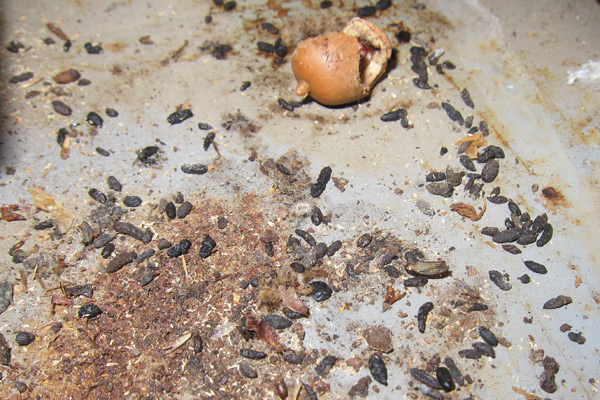
With a name like House Mouse it is clear to see that they will generally be found wherever humans and urban areas are to be found, but will also often be found among crops where they can cause damage to the crops. Trying to identify that mice are living in a house people will often need to hear the characteristic squeaking, or to see the small black droppings which will often be found around food sources.
In terms of the diet the House Mouse has adapted very well to living around humans, and will often be able to eat crops and animal feed as well as any other grains, but are omnivorous if they are unable to find plant matter to eat.
Conclusion
The House Mouse is a very small animal when compared to the human which will usually provide much of the food for the mouse, but they can cause a lot of trouble. The image of the mouse in the media is very cute and friendly, but in reality it can cause great damage to food and crops, and can also be very difficult to remove once they are settled in a house.
How to Control Rodents in Attic -
People know that there has to be a way to control how many rodents enter the attic. They are right to assume this. There are ways of controlling this so that it is no longer an issue for them. One way to do this would be to keep things clean. Rodents love clutter as they can hide and multiply. Only store those things that you have to and make sure everything is neat. You want to be sure to use storage containers as well so that if there are rodents up there, they don’t gnaw on things either.
Another thing that people can do is that they can be sure to look at the attic and check for openings. A lot of people don’t do this often enough. The only time they check for openings is after they have found they have rodents in their attic. This will save them a lot of time if they do this every now and then and not when they think there is something up there.
There are going to be times when things might sneak up there or when you think that something has snuck up there. The number one thing to control rodents is if you hear a noise, then you really need to go to check it out. Too many people wait too long and if there are indeed rodents in the attic, they have already multiplied and have little ones who can then multiply. The sooner you get a handle on things and seal the entry way off then eliminate them, then you can control rodents in attic.
Go back to the
How To Get Rid of Mice in the Attic home page.
Read more mouse information here:
Do relocated mice survive?
Do cats keep rats and mice away?
Do dogs keep rats and mice away?
Do mice chew pex or other water pipes?
Do rodents eat insects?
Biology of the Mouse
Do mice like rats and mice feel pain?
Do mothballs or ammonia help repel mice?
FASTEST WAY TO GET RID OF MICE:
How do I clean house mouse feces out of my attic?
How to get mice out of the garage
How big the mice can get
HOME REMEDIES TO GET RID OF MICE:
How do you remove a house mouse stuck in a garbage can or other place?
How to get mice out of blown insulation
What is a house mouse’s mating habits?
How Mice Communicate Using Pheromones
How to find and remove a dead house mouse
Humane mouse traps
Is a house mouse feces dangerous to touch or breathe?
Mice Infestations Can Create Heavy Damage in Attics
How to trap mice - how to catch a mouse
How to keep mice out of my garden
How to get mice out of your car
Humane mouse removal get rid of them without hurting them
How to keep mice out of my garbage
How to inspect a house for house mouse entry holes.
Does poison make mice thirsty and die outside
What are some humane ways to kill a house mouse?
Modifying Your Property to Keep Mice Out
Types of house mouse snap traps
What are some of the symptoms of a sick house mouse?
mouse poop photos feces
How to use one-way exclusion funnels to remove mice without trapping them
What attracts mice?
What Can Mice Climb?
What diseases do mice carry?
What should I do with a house mouse after I catch it?
What is the best bait to trap a house mouse?
What should I do if I find a nest of mice in the attic?
What if a house mouse got inside my house, bedroom, kitchen, etc?
Can Mice Chew Through Anything?
What to do about a trap-shy house mouse
Which is easier to trap - mice or rats?
What is a house mouse’s natural diet?
Will a pest control company remove a house mouse?
Why Mice Chew on Wires
What to do about a house mouse on the roof
What equipment is needed to trap a house mouse?
Will a strobing light or high pitch sound deterrent machine work on mice?
Will a house mouse in the attic have a nest of babies?
Will homeowners insurance pay for house mouse damage?
How much does mouse removal cost?
Will repellents get a house mouse out of the attic?